Wounded Knee Massacre
The Master Butchers Singing ClubThe Wounded Knee Massacre is the historical violence that defines Minnie’s childhood and reverberates through the lives of Step-and-a-Half, Delphine, and Roy. The novel presents it through layered recollection rather than as a detached historical episode: Minnie’s escape, her father’s final message, a fragment of a Ghost shirt, and the songs that survive the dead all show how the massacre remains active in memory long after the violence itself has passed.
Background and Roy’s Account
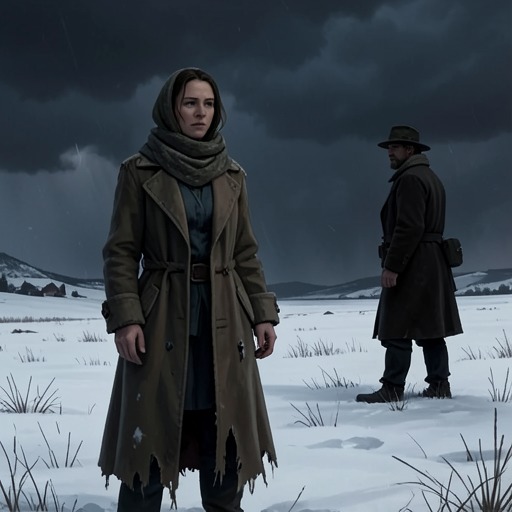
Roy recounts the massacre to Delphine as the story of what happened to her mother when she was eight. He describes a group of starving and freezing Minneconjou Lakotas fleeing after the defeat of their people, with their leader, Big Foot, gravely ill. They seek protection from the army, surrender their guns, and make camp where they are directed. Roy stresses their vulnerability: they have little food, and Minnie’s father shares their last piece of bannock with a woman and her baby.
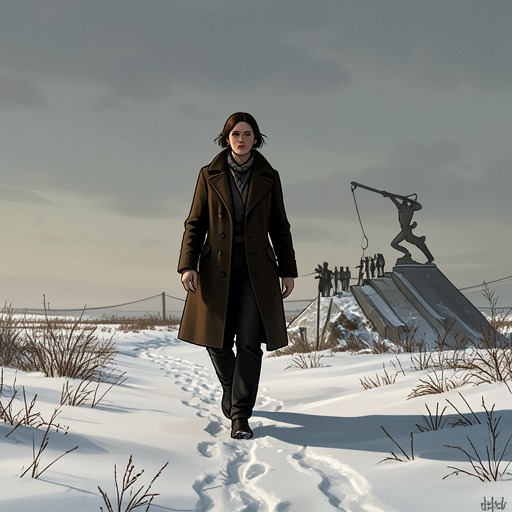
The scene of temporary shelter is followed by the opening of gunfire. Roy tells how Minnie’s father is killed and how Minnie escapes with the woman who had shared food with her. The account culminates in Minnie’s flight from the camp and her solitary journey through snow, following the tracks of other fleeing people until she reaches a mission. Roy identifies the episode as something recorded in history books but argues that its full human cost is seldom acknowledged or believed.
Minnie’s Escape and the Afterlife of Memory
Minnie’s survival does not mean that she leaves the massacre behind. The novel later describes her as unable to remain still for long: walking gives her distance from memories of the violence, while open space and the indifferent weather offer relief from human cruelty. Her father’s last words, telling her to go home and say that it is over, persist in her memory alongside the scene of his death. The command to carry news away from the massacre becomes inseparable from the burden of carrying the experience itself.
The massacre’s effects are also conveyed through what Minnie cannot fully remember. Her later movement across the land is described as an effort to outdistance both remembered and unremembered experiences. The account therefore treats trauma not as a closed recollection but as something that returns through habits, routes, and the conditions under which a survivor can endure the present.
The Ghost Shirt and Song
Step-and-a-Half preserves a scrap of the Ghost shirt associated with the massacre. The fragment, made of yellowed muslin with faded decoration, is sewn into her quilt. She understands the shirt not as evidence that its wearers were foolish or deluded, but as a source of comfort through connection with the dead. In her understanding, the cloth allows the wearer to draw near to the dead through their songs.
Songs link the massacre’s victims to the living without resolving the violence. Step-and-a-Half remembers both soldiers’ songs and a mother’s lullaby, and later hears voices carried across Argus in a passage that joins songs of different peoples and traditions. The recurring idea that the dead are only a song away gives the scrap of cloth a role beyond remembrance: it embodies a continuing relationship with those killed, while acknowledging that the past cannot simply be put away.
Family History and Historical Memory
The massacre reaches Delphine through Roy’s telling, which makes family intimacy a channel for a history that might otherwise remain remote. Elsewhere, the novel places this history beside other forms of remembered violence and silence. Fidelis and Cyprian never speak openly about their shared war, though its memories repeatedly surface between them; later, Fidelis tells Delphine the story of Johannes and the losses that shaped his life. These parallel narratives do not equate distinct events, but show how the book represents violence as something carried through silence, delayed telling, and inherited knowledge.
The novel also connects Minnie’s story to the differing ways history is preserved. Roy says the massacre can be found in history books, yet insists that its suffering is often not fully told or credited. The novel’s own account moves between Roy’s speech, Minnie’s remembered experience, Step-and-a-Half’s keepsake, and the later songs that travel through town. Together, these forms give the massacre a continuing presence in the family’s lives while resisting the idea that a public record alone exhausts what happened.
Significance
The Wounded Knee Massacre is not only the origin of Minnie’s flight; it shapes the habits of survival that follow. Walking becomes a means of living with memories that cannot be escaped entirely, while the Ghost shirt and songs preserve connection with the dead. By carrying the event across generations through testimony, objects, and recurring music, the novel makes remembrance a fragile practice: the past remains close, even when its survivors cannot tell all of it at once.